


Political Communication, Framing, and the Media: Donald J. Trump State Of The Union Address
- Apr 29
- 3 min read

47th President of the United States: 2025 - Present
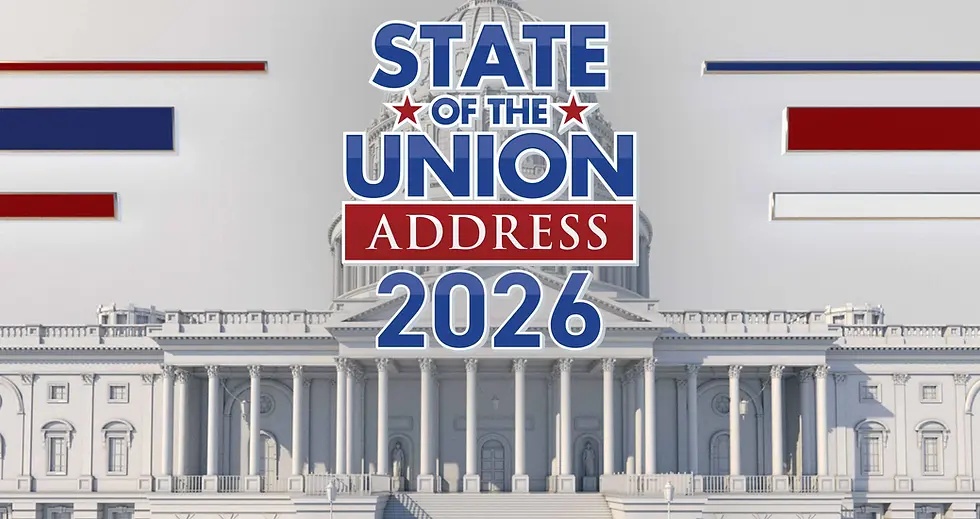
Donald Trump gave the 2026 State of the Union Address on February 24, 2026, in front of Congress at the U.S. Capitol in Washington, D.C. In this speech, he talked to both lawmakers and the American public about how the country is doing and what his plans are moving forward. He focused on major topics like the economy, immigration, and national security, while also highlighting accomplishments his administration has already achieved. The State of the Union is an important annual event because it gives the president a chance to update the country and persuade people to support his goals.
In my view, the main message of the speech was that the country is heading in a positive direction and that the current administration is playing a key role in boosting the economy, enhancing national security, and managing immigration. The speaker focused a lot on celebrating achievements and convincing the audience that these policies should continue. There was a strong emotional connection, especially when talking about safety, jobs, and American pride, which made it easy for people to relate to the message.
The argument was mostly built on examples of progress, which were effective, but it felt a bit one-sided because it didn’t really address any opposing viewpoints. Overall, I think the speech was effective in energizing supporters and clearly laying out the president’s goals. However, it might not have resonated as well with those who disagree, since it didn’t really engage with alternative perspectives.

Traditional media shapes the way speeches are perceived, often reflecting their ideological biases. For instance, liberal outlets like The Guardian focus on controversies and fact-checking, which can make the speaker look worse. In contrast, neutral sites like Axios stick to the facts, offering a more balanced view. Conservative channels like Fox News typically highlight positive aspects, like economic success. Overall, traditional media can be accurate yet biased, depending on what they choose to emphasize.

On social media, especially platforms like Twitter (now X), reactions are more emotional and polarized. Users react in real-time, sharing strong opinions through hashtags and trending topics, which often prioritize immediate responses over thorough analysis. This makes social media less reliable for accuracy but useful for understanding public sentiment.
While traditional media aims for some objectivity, social media is much more fragmented and opinion-driven. The varying perspectives from liberal, conservative, and even foreign media highlight the diversity of perceptions and biases in how messages are conveyed.

After looking at the speech myself and then comparing it to both traditional and social media coverage, I noticed that my understanding was more balanced than what I saw online. The speech itself focused on promoting achievements and future goals, but traditional media framed it in different ways depending on their perspective. Because of this, I think traditional media can still be reliable, but not fully trustworthy on its own, since it often reflects bias in what it chooses to highlight. Social media, on the other hand, is even less reliable because it is driven by opinions, emotions, and quick reactions rather than facts, which can hurt democracy by spreading misinformation and increasing division. Politicians during the speech may seem more formal and controlled, but media coverage and social media reactions can make them seem more controversial or extreme. Overall, this shows that political communication is heavily shaped by media framing, and as the audience, we have to look at multiple sources and think critically instead of just believing one version of events.
-LOW
References:
The Guardian article: The Guardian. (2026, February 25). First Thing: Trump claims a year of wins and attacks old foes in the longest State of the Union. https://www.theguardian.com/us-news/2026/feb/25/first-thing-trump-claims-wins-attacks-foes-state-of-the-union
State of the Union speech (official transcript): The American Presidency Project. (2026, February 24). Address before a joint session of Congress on the state of the union. https://www.presidency.ucsb.edu/documents/address-before-joint-session-the-congress-the-state-the-union-31
Twitter/X post (White House): The White House. (2026, February 24). Post on X (formerly Twitter). https://x.com/WhiteHouse/status/1970514261941109165
New York Times live coverage: The New York Times. (2026, February 24). Trump State of the Union address live updates. https://www.nytimes.com/live/2026/02/24/us/trump-state-of-the-union


Comments